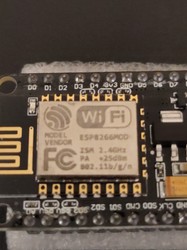
No, because they will be too easy to jam.
drones can be also shot down and operators radiolocated very quickly
However, sustaining broad-spectrum jamming over a large area is expensive and impractical.
If the mesh network is wide enough, redundant enough, mobile enough, then traffic can be routed around jammed areas.
Unfortunately, most mesh networks rely on civility for long range. They just don’t have the power to punch through.
It would be relatively easy to jam large areas.
Its actually pretty cheap! Its just not useful for anyone. Plus there are point to point and laser communications.
deleted by creator
Think of a signal jammer as something blasting static. You’re only hope of getting around that is playing something even louder. Russian jammers are effective because they don’t care about leaving channels open for communication and civil comms. They just blast farts on every frequency.
What works in one dimensional ear canal doesn’t work in three dimensional open space.
While we have noise cancelling headphones, have you ever heard of noise cancelling speakers?
Actually my father in-law used to design loudspeaker systems that canceled certain frequencies put out by power plants at different heights along exhaust stacks
I assume the trick is knowing or calculating how far you are from the source your timing to block, and having speakers that are broadcasting away from the source.
But wouldn’t those jammers also disrupt other critical comms in use by those who might do the jamming?
no, because they have separate comms using completely different bands. esp when you’re talking about military
if you switch to different band, probably nonstandard and unlicensed, then there must be someone else to listen
That’s actually what makes LoRa meshes interesting here - the chirp spread spectrum is genuinely hard to jam without wideband power, and the ISM bands they ride on (433/868/915 MHz) are too economically important for a state actor to blanket-jam without taking out IoT, logistics, and industrial telemetry as collateral. The asymmetry flips: jamming costs them more than it costs you.
lora bitrate and radiated power are tiny and such considerations are only important in peacetime. gps is jammed now routinely and it’s more important than 95% of iot dogshit. telemetry and remote control that matters is either wired or has reserved separate band, like power grid switches. not sure wdym by logistics
you also have to be stealthy and if you emit you’re seen and if you’re seen you’ll be found and soon dead. lora doesn’t help you with that especially if you increase power to overcome jamming. using starlink in iran now for example is a capital offense. last time i’ve checked, irgc ew looks for starlink wifi and they can find it even if it’s renamed because of its distinct signature. it takes less to spot lora. they do not look for uplink for some reason but they try to jam it and downlink too
Those are very valid points. Thank you
Sure that’s a weakness but it seems likely these kinds of techs will be plausible solutions even if only in isolated cases.
Mesh networks:
- Aren’t encrypted
- Easy to track the origin location
- Easily jammed
Drones:
- Easily spotted to take down
- Easily jammed
Probably not, no?
Despite what top comment says, what other options are there? Why wouldn’t these be the initial comms options besides jamming? I’d argue for yes up until jamming happens then you pivot. Saying no because of a roadblock and offering nothing else just reads as apathy.
What’s wrong with good old Internet with E2EE?