• 3 Posts
  • 780 Comments
Joined 3 years ago
cake
Cake day: June 21st, 2023

help-circle
  • I have a relative with a phone by his pool

    He uses an old rotary phone for it, because it’s all pretty basic electromechanical stuff that can’t really get messed up from it being out in the rain or whatever. It can’t make outgoing calls because modern phone systems don’t work with rotary phones, but it receives incoming calls just fine

    It should maybe be noted that he’s an old school telephone lineman who really knows his stuff, so I don’t know if there were any other adapters or anything needed to make his setup work.


  • I got a few stories

    If we want to count “smoke” as weather, wildfire smoke blowing in from Canada was pretty crazy

    I work in 911 dispatch and was working the night in first started hitting our area. We got a couple calls about smoke, which didn’t immediately seem like anything too unusual. We sent the police and fire department out to look for where it was coming from and they confirmed that yeah, there was smoke, but no obvious source. It of course didn’t blanket our whole county at once, and as I recall the weather was fairly nice and at first we were kind of writing it off as a couple people having big bonfires somewhere.

    But as the night went on we kept getting more calls. Eventually we were somehow alerted about the wildfire situation. When someone called about smoke we still sent someone to check in case there was actually a fire somewhere, but we also advised our callers about the wildfire smoke, and basically everyone I told was brown away by that.

    Hurricane Ida hit my area pretty hard. It hit on my day off. About a year before my area had gotten hit pretty hard by another storm and we had historic flooding, power was out for a good chunk of the day, and with that in mind I ran out to get a battery backup for our sump pump the morning before it hit. My wife wasn’t sure if that was necessary, but we again lost power for like 16 hours so we were glad to have it.

    Once the storm was well underway, of course I got the page from work that anyone able to come in was needed to handle the call volume. I made an attempt to get in, but every direction I went I encountered flooding, I don’t think I made it a half mile from home in any direction before needing to turn around.

    The storm the year prior was the worst flooding in our area since they started keeping records, and it was by a pretty solid margin. Ida demolished that record. It took them a week or so to figure out how much it broke that record by because it totally swamped the gauge at the river where they measured it.

    Like I said, we lost power for about 16 hours, I have some friends nearby who are on a well for their water. They have a generator to keep their fridge and freezer running but it’s not enough to also run their well pump. We’re on city water but have no generator, so after the storm passed we ran our perishables over to them to throw in their fridge, and they came to our house to take a shower and fill some jugs with water.

    Before that, I had tried to go out to try to grab some ice for our cooler. Without power, the one store I could get to of course wasn’t open. I tried to get to somewhere else, and at that point I couldn’t make it much further than the night before. In some places it was because of downed trees and wires and such, but in others it was because some roads and bridges were just totally washed out.

    Also, the main reason we lost power was because the substation that provides power to our area ended up underwater.

    If we want to count solar weather, seeing the northern lights from my home in 2024 was wild.

    Back when I was in scouts, I went out to Philmont, which is a big property in New Mexico for scouts to go backpacking.

    I don’t think that area is technically considered a desert, but it was certainly a lot drier than what I’m used to at home.

    At least it usually is.

    We got to basecamp, everything was pretty dry and dusty. We do all of our orientation and checking in and such, and settle in for the night before starting our trek the next day. At Basecamp they have you in canvas wall tents on a wooden platform (if you search for something like “scout summer camp tents” you’ll see exactly what I’m talking about)

    It downpoured that night, apparently the most rain they’d gotten in a single night in the last 10 years.

    Coincidentally 10 years prior was the last time my troop sent a group to Philmont, and they also got rained on pretty hard.

    I think because it was usually so dry they got a little lax in waterproofing their tents. It was blowing sideways and kind of worked its way through the seams of the tent. So if you were on one side you were fine, but on the other side of the tent you got wet.

    I was on the wet side. Luckily the first couple drops hit my face and woke me up. I checked with my tent mate and he was fine. I packed up my sleeping bag so it wouldn’t get wet, pulled on some warm clothes and my rain gear and crawled under my cot, and that did a pretty solid job of keeping me dry. A lot of people ended up needing to dry out their gear the next morning before starting their trek.

    Again, I don’t know if that area is technically a desert, but you hear about how the desert comes alive after the rain, plants bloom really quickly and all of that, and we did see a little bit of that happening, things were definitely greener the next day than when we arrived.

    We also ended up having to hike an extra couple miles the first day that we planned because the bus that was supposed to drop us off at the trailhead wouldn’t be able to make it through some of the mud.

    A few days into our trek, our itinerary had us camping near the top of a mountain. It would be a dry campsite with no potable water available, so we made the call to have our dinner for that day for lunch, since it was freeze dried stuff that needed water to cook, so we could refill our water when we had the chance to last us through the next day.

    As we start up the mountain, a thick fog rolled in. By the time we made it to the top we were all pretty cold, damp and miserable and didn’t even have a hot meal to look forward to. We pretty much set up our tents and went to bed.

    The next morning we woke up to a clear, beautiful day. We go to the top of the mountain to appreciate the view, and look down into the valley below and see… Clouds. Just a couple of them drifting by. And we realized that the fog we hiked through and camped in the day before had been a cloud.

    If a mattress salesman ever tells you “it’s like sleeping on a cloud” - run. Clouds suck for sleeping.

    We had two crews doing different trucks that took us through different parts of Philmont. The other crew at some point got caught in a thunderstorm where lightning was striking way too close for comfort and had to spend some time crouched down in the lightning position while it passed.


  • I think my impact on the world is a nut positive. I make it a point to help other people when I can, I’ve given a bunch of strangers a jumpstart in the parking lot, helped them change a tire, gave a stranded bicyclist a lift home when his pedal broke, clear my schedule to help my friends move, put my shopping cart back the right way and even sometimes straighten out the ones that were carelessly pushed in the general direction of the cart corral by some degenerate, and generally try not to be a bother to others.

    As for whether that makes me a good person, I think that’s kind of up for debate. At my core, my motivations tend to be pretty selfish. I do those good deeds because I want others to do the same kinds of things for me. If I need help moving, I can count on a small army of friends and acquaintances showing up to help me because I’ve always made time for them. I want to live in a world where other people treat me the right way, and if I’m not even willing to do that, why should I count on others to do that? Not that it’s all a 1:1 transactional thing, I don’t expect every good deed I do to directly come back around to benefit me, but I do kind of hope that I’m sort of kicking off a chain of “paying it forward” that maybe inspires even more people to do the same and eventually I get to be the recipient of some random acts of kindness.

    So a lot of the time it’s not really some sort of selfless altruism that drives me to do the right thing, which is a big part of what people imagine when they think of a “good” person.


  • But what were talking about isn’t implemented a flawed system, it’s improving one that’s already flawed, and the result still wouldn’t be perfect but it’s better than what currently exists

    And it doesn’t prevent passing even better laws further down the line, but I think you know that creating new more comprehensive survivor benefits that would cover everyone is a much harder sell than a comparatively small tweak to copyright laws.

    And if we remove those copyright benefits before those new systems are ready, you’re leaving people in the lurch without any safety net until those new systems can be created (if in fact they ever are)


  • In the US, it’s a pretty common situation to have some kind of retirement plan through your job, like a 401k, or if you’re very lucky a pension. And if you die, in a lot of cases, that retirement plan gets paid to your spouse or children in some fashion. That’s a big part of how people plan for their families in case something happens to them. It might help to cover funeral expenses, or settle debts, or legal expenses, or just to make sure their spouse or children can afford to live if they die.

    If you’re an independent artist though, you may not have that. Ideally you’d have some kind of life insurance, IRA, etc. to help fill that same role, but art is a fickle business, not everything sells well or is an instant classic, and sometimes it takes a while for something to get popular.

    Let’s say I write a book and get it published, and it’s reasonably successful, but not exactly a bestseller. I probably got a nice little payment for selling the rights to the publisher, but I’m also expecting to have more money trickling in for at least a few years as long as it stays in print and keeps selling. And in the meantime I’ll hopefully get more books published, more payments, hopefully bigger, from the publisher, and then have even more money flowing in from book sales. If I’m really lucky, maybe one or more of those books will really be a hit, if not, hopefully I’ll at least have enough moderately successful books published to have a steady income from them, be able to save up some money, keep food on the table, save up for my kids’ college funds, my retirement, etc. it’s a long-term plan.

    But instead I keel over and die. My spouse is now a single parent.

    If I worked a normal job, hopefully some of those benefits are kicking in to help my spouse take care of herself, my funeral arrangements, and our kids. Survivor benefits from my pension start payment out to them or they get access to my 401k, maybe I even had some kind of life insurance through my job.

    But since I didn’t work a normal job, all they get is that trickle of money from my book sales.

    And you want to cut even that off for them.

    And then to add insult to injury, now that I’m dead and it’s in the public domain, maybe my book gets turned into a movie which becomes an enormous hit and makes millions of dollars for some Hollywood studio, and my family doesn’t get a penny of it.

    Yes, ideally we’d have better social safety nets in place to help people out in those kinds of circumstances, but we don’t, and until we do this is what we’re stuck with.


  • For an independent artist in the US, I think their lifetime +25 years & 9 months.

    It’s something they made, they created it, they deserve to profit off of it.

    Why the +25 years & 9 months?

    Independent artists may not have a more traditional retirement plan with a pension/401k, health benefits, etc. They work for themselves, their income can be inconsistent, sometimes their work may not become popular until years later or even after they pass away.

    But that work is how they’re providing for their family, their children’s care and college funds and such, funeral expenses, help their spouses along after they pass, etc.

    In the US you can usually stay on your parents healthcare up until 26, so I think it’s fair that we should allow their family to profit off that copyright for that long after their death.

    If I were an artist, and immediately after getting my wife pregnant, keeled over dead, I’d want to know that I’ve left behind something that will help them along at least a bit hopefully at least until my kid is hopefully old enough to stand on their own since.

    And sure, not every artist is going to be leaving behind a pregnant wife, but most people are going to have some sort of family who are going to be stuck with funeral expenses and other legal bullshit to sort out, and I think that 25ish years is a reasonable enough timeframe to keep the copyright tied up before releasing it to the public domain.

    For works created by/for a company (or owned by one if an individual creator sold it to them,) I think it can get a little murkier.

    A lot of people cite the old 14 years + one 14 year extension that was the original US copyright law. And I get it, that sounds reasonable enough I guess.

    But a lot of things have changed since then, companies are bigger, things like video games exist now that didn’t back then, and some things have gotten a lot more complex.

    Let’s look at the MCU, just the main movies have come out over 18 years and is still going for the foreseeable future, and with spider man and Deadpool sort of tying in some of the pre-MCU movies into the shared multiverse, you can even argue that it’s 26 years at this point. Hell, Marvel and DC have been doing their thing since the 30s. New Star Trek stuff has been trickling out since the 60s. Mario first appeared in Donkey Kong 45 years ago. Skyrim came out in 2011, and the next elder scrolls game is still probably years away. We just didn’t have franchises like we do now back in 1790, I think it’s fair that the laws should reflect in some way how long-lived some franchises can last now.

    I think it might be fair at this point to allow a company to hold copyright on something indefinitely (please put away your torches and pitchforks) but

    1. They need to renew the copyright every 5 years. If they don’t it automatically enters the public domain.
    2. In order to renew it they must make that copyrighted property available to the average person. If I can’t go out and buy a copy of a specific movie, game, book, etc. then they don’t get to sit on the copyright for it.
    3. After maybe 50 years (I’m flexible on that, but 50 is a nice, round number,) as long as they’ve kept up with the renewals, they still own it, and other people/companies have to pay them to use it for commercial purposes, but they no longer control it, after that point they can no longer deny anyone the right to use that media as long as they’re paid for it, and they don’t get to set the price, that becomes a fixed rate set by the government. A 50+ year old movie (or whatever) costs $X if you want to make and sell copies of it, $Y to create and sell merchandise based on it, $Z to show it in a theater, etc. and those prices will be kept reasonable.
    4. Also, after 50 years, non-commercial use opens up. You can use it to your heart’s content however you want, copying it, sharing it, posting it online, whatever you want, as long as you’re not making a profit on it.

    Bridging parts 4 and 5. Let’s say you wanted to post a whole movie on YouTube. If your channel isn’t monetized you’re totally in the clear, you can do that. However YouTube might still make a profit off of it being there due to ads and such. So YouTube can either

    A. Not allow copyrighted material in their TOS, and must take it down when (and only when) requested by the copyright holder.
    Or
    B. Choose to pay the appropriate licensing fee to stream that copyrighted material, which again would be a fixed, reasonably low rate set by the government. It might be worth it to them to pay that fee because it means increased traffic to their site.

    If your channel is monetized, you would have to pay that fee. Again, these fees are going to be fixed and kept fairly low. What those fees are is probably going to depend on how it’s used. Using, let’s say, a clip that’s 30 seconds or less of something in another video might be a one time fee of $5, but if you’re posting the whole movie, maybe that deserves some percentage of what you earn from those views unless YouTube decides to pay for the streaming license for that movie (if you then owe anything to YouTube for that and how much would be part of whatever monetization agreement you have with YouTube)

    Deciding exactly what those licensing fees for 50+ year old media should be is well outside of my pay-grade.

    EDIT: There’s a lot more to intellectual property than just copyright, trademarks, patents, etc. so this is really only scraping the surface, but hopefully this kind of shows where my head is at with these kinds of matters.


  • Just kind of thinking this through

    EDIT: my math is wrong. I think I didn’t move a decimal point or missed a metric prefix somewhere, don’t have time to go through and correct myself right now, but go ahead and double check that.

    A typical beer is around 5%, so about 25x higher than the concentration in your blood if you’re at .2

    A Google search tells me a mosquito drinks about .001 to .01 milliliters of blood per meal, let’s just go with the higher number. Just gonna assume the density of blood is close enough to water which is a nice 1:1 conversion, so that’s about .01g of blood.

    A mosquito weighs somewhere in the neighborhood of 2-3grams

    So after eating, a mosquito has drank about 1/200 to 1/300 of it’s body weight in blood.

    Gonna mix units now, sorry science people.

    1 pint weighs around 1lb. If you weigh about 200lbs, and have one beer, you’ve drank about that same ratio of beer to your body weight in terms of just how much liquid youve drank.

    But again, the concentration of alcohol in a beer is much higher than the concentration in your blood.

    So 1 mosquito bite is roughly the same in terms of volume to one beer, but in terms of alcohol content, it would be more like 1/25th of a beer.

    So if a mosquito really gorged itself and drank 25x the normal amount of blood at once, it might start feeling a tiny buzz, but that might just be the fact that it’s a mosquito (because they buzz, get it?)

    So that’s sort of drinking a whole case of beer but only one of them actually had alcohol.

    If you’re a hardcore alcoholic you might be able to double that BAC to about .4%, which is about where most people would be unconscious and possibly have some significant medical complications.

    But that would still only get the mosquito to about 2 beers worth of alcohol if they drank way more than they normally would in one meal.

    This is all assuming mosquitoes process alcohol similarly to us, things don’t always scale up and down so nicely and mosquitoes are of course different animals than humans, so that could throw things off quite a bit.


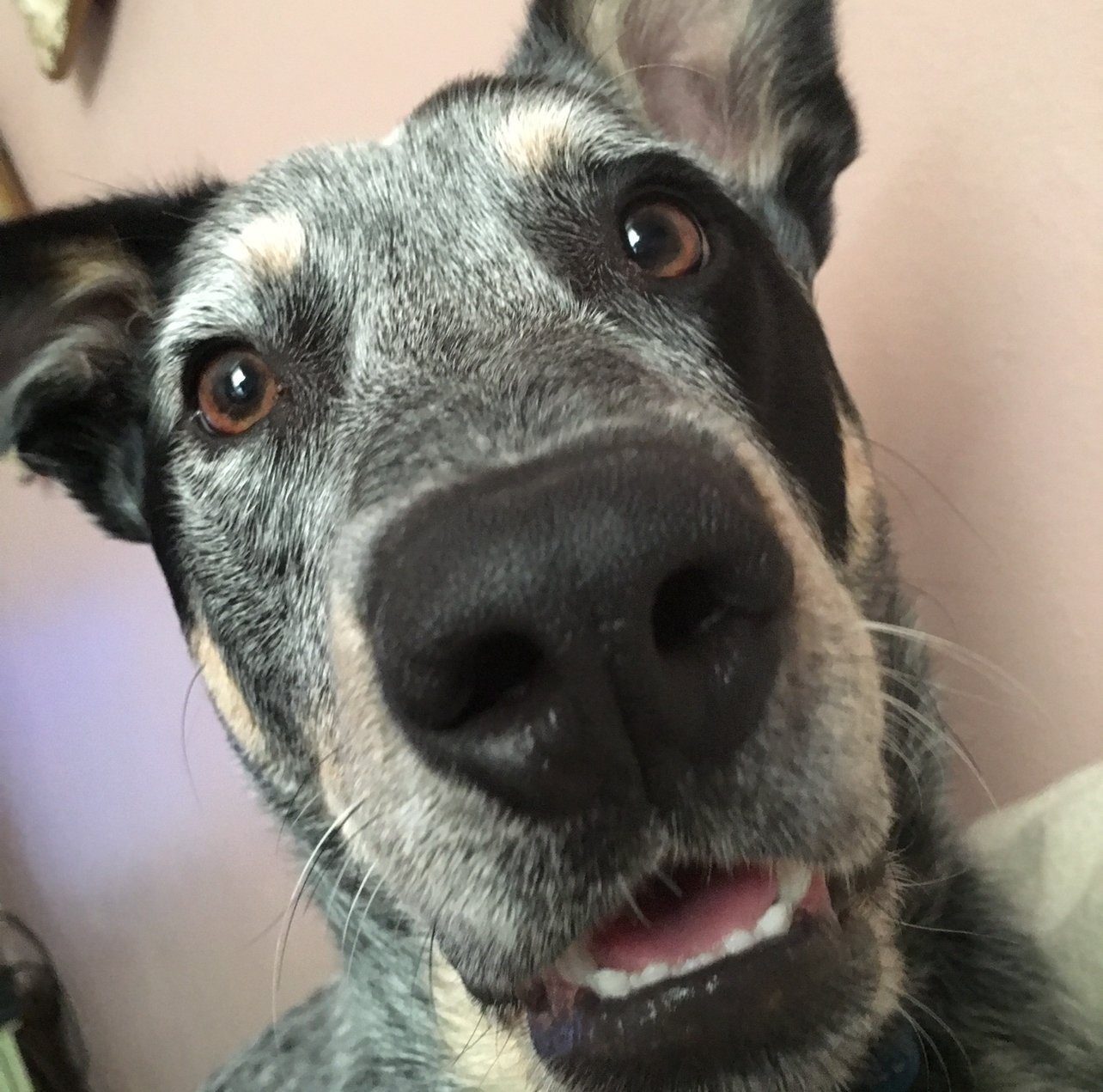
  • My dog sometimes makes some adorable little yipping/whooping noises in her sleep.

    She’s also figured out that if she paws at my wife’s lap when she’s at her desk she can spin her around to force her to give her attention.

    And when she wants to play she’ll throw a ball at you. Or when she wants to play by herself she sometimes throws things down the stairs so she can chase after them.

    She’s got a weird mischievous streak, she sometimes steals random objects off the counter, doesn’t chew or try to eat them, just kind of carries them to a random place around the house. Came home one day to a martini glass sitting on our bed, kind of impressive since her breed (malinois) isn’t exactly known for having a soft mouth.

    If you’re napping on the couch, sometimes she’ll come over and nibble on your nose gently if she wants attention.


  • Most bite valves I’ve had are pretty much universal, the tubing is usually about the same size from one brand to another so you pretty much just need to jam the barb fitting in. If it seems like it’s a little loose you could probably throw a hose clamps on it if you were really intent on not buying a new hose.

    At the other end of the hose the fitting to connect it to the bladder may be another story, that definitely changes from brand to brand and over time as they roll out new models, so getting a new one to fit may be impossible.


  • Regarding marriage and relationships

    I saw a reddit thread many years ago before I met my wife asking for advice from long-time couples.

    I was single at the time, and was pretty comfortable with that, not that I wasn’t interested in being in a relationship, but it wasn’t a priority for me and I never had much luck picking up girls.

    Most of it was the usual stuff about communication, and sharing housework, respect, and all of that.

    But the one that stood out to me was

    “Don’t forget to date your wife”

    A good many years later, I managed to stumble my way bass-ackwards into dating my now-wife. A few years later we were married.

    And for a lot of couples, dating kind of slows down at that point. One or both of them stop putting in effort, and they just kind of stagnate and drift apart.

    That’s far from the only reason relationships fail of course, but I think that’s a bigger part in a lot of cases than many people think.

    So I always keep my ear to the ground for cool events, restaurants, shows, places to go, things to do, etc. and make sure that there’s always something coming up on the horizon for us to look forward to. Sometimes it’s a simple dinner at a restaurant we’ve been to countless times, sometimes it’s a big elaborate day out where we get dressed up, find our way to a couple different nice bars and restaurants, walk around a museum, see a show or to an orchestra performance, etc.

    I try to have at least one thing planned a month, not always successfully, but more often than not, and we sometimes squeeze in another little spontaneous date night or two here and there. Most of the time we’re out doing something fun as a couple at least once a week.


  • This will all be a bit of a simplification

    Calories are a unit of energy. When were talking about food we’re usually talking about kilocalories, in the US we usually just say Calories (with a capital C) some other countries may list them as “kcal.” It’s the same thing, 1000 calories (with a lower case c) is 1 dietary Calorie/kilocalorie. The calorie is defined as the amount of energy it takes to raise 1ml of water 1 degree Celsius. That might feel like a weird way to think about energy from food, but energy is energy, whether you’re using it to think, move, or just keep your body temperature where it’s supposed to be

    The fuels your body uses for most of its energy are sugars. Sugars are a type of carbohydrate (carb,) which are chemicals that are basically just chains of different amounts of carbon, hydrogen, and oxygen.

    We general group these into 3 main types

    Simple carbs (mono- and di- saccharides)- basically sugars. Glucose is a sugar and the one your body primarily uses, most other carbs basically get broken down into glucose. Sugars are easy for your body to break down and use almost immediately. Sucrose (table sugar) fructose (from plants) maltose, dextrose, lactose, basically anything you might see on a food label that ends in -ose.

    Complex carbs (polysaccharides)- these are things like starches. They’re basically just a bigger molecule that your body needs a little more time to break down into simpler sugars, so you’re not really going to be getting energy from them for a few hours or even the next day. This is why you might hear about athletes “carbo-loading” with something like a big spaghetti dinner the day before a big event, the energy from that dinner will be available to them in time for that event.

    Dietary fiber - these are basically just really complex carbs that your body can’t really break down like cellulose (there’s that -ose ending again.) Some other animals can break them down for energy, like cows do some extra fermentation in their guts which is why they have 4-chambered stomachs that lets them break it down, but we can’t. It’s still important to other aspects of digestion for us but we’re not burning it for fuel.

    Related to that is the glycemic index, which is basically a measure of how fast your body can process those carbs. Sugars have a high glycemic index and raise your blood sugar rapidly. Complex carbs have a lower glycemic index and raise it more gradually.

    It wasn’t part of your question, but I feel like that obviously leads to some discussion about insulin and diabetes. Insulin is a hormone that regulates how fast glucose (which remember is the basic sugar that your body runs on and everything else pretty much gets broken down into) is absorbed from your blood into the rest of your body. People with diabetes don’t produce enough insulin, which means that sugar just kind of builds up in their blood and doesn’t get absorbed by their body, which, putting it mildly, is very bad. Not gonna go into too much detail on that, because it’s outside of the scope of the question, and we’re also dancing around the limits of my own knowledge.

    Also a bit off topic but let’s talk about fat. You’ve eaten more calories than you really need to sustain yourself, what does your body do with the excess energy/sugar? Well it will try to convert some of that sugar into fat to store for later use when you’re getting less calories from your diet that you really need. It’s an emergency store of energy. It’s sort of slow and energy intensive for your body to convert fat back into sugars that it can use, so your body really only starts burning those fat reserves when there’s no other source of energy available.

    Which brings around to the last thing you asked about - gluten. Gluten is a protein found in some grains, when you knead dough made from flour which contains gluten you basically get all of those gluten proteins to get all tangled up and form a stretchy web which makes the dough nice and stretchy, let’s it trap gas bubbles from yeast fermenting or chemical leaveners like baking soda/baking powder, and gives bread a bit of a chewy texture.

    Just like with fat and carbs, your body can break down protein for energy (and it kind of needs other things from proteins, but that’s neither here nor there) and for most people gluten is just fine, not much different than if they were eating meat or beans or other protein-rich foods.

    But some people have medical issues that prevent their bodies from processing gluten properly and eating it makes them sick, so they need to avoid it in their diet.

    Gluten-free foods aren’t necessarily low-carb (or low-calorie,) something like a potato is basically all carbs, but has no gluten.

    But if you’re trying to create a substitute for something that would normally be made with something like wheat flour (which is what most bread and pasta is made from, for example, and has a lot gluten and tons of carbs) one of the obvious ways to do that is by substituting something else for that flour that doesn’t contain gluten, like maybe chickpeas, and most of those substitutes are going to be lower-carb than flour, so most gluten-free substitutes tend to be fairly low carb, which sometimes makes them handy for people who need to reduce how many carbs they’re eating even if they don’t have any real need to avoid gluten.


  • Under some circumstances, a car may need to brake suddenly, like if a kid or deer or something runs out into the road, the car in front of you suddenly breaks down, a car suddenly swerves into your lane, etc.

    And so you need to be allowing enough space between yourself and the car in front of you and paying attention so that you can stop in case that car does suddenly.

    When they assign fault for an accident, it’s usually not 100% one party or the other’s fault. In a case where someone slams on the brakes for legitimately no reason, they’re probably going to be at least partially at fault

    But regardless of whether they were or weren’t in the right to stop suddenly, if you were following too closely to stop in time or not paying attention, you’re also at fault because the accident could have been avoided if you had been doing your part.

    You can’t control what the cars in front or behind you are doing, but you can control what you are doing, and if there was something you could have reasonably done to avoid the accident but didn’t, you’re going to be at least partially at fault.


  • Fondots@lemmy.worldtoAsk Lemmy@lemmy.world*Permanently Deleted*
    link
    fedilink
    arrow-up
    12
    arrow-down
    1
    ·
    1 month ago

    I’d tread carefully and request some elaboration from him on the situation because just based on what he said that could be all over the place, and I’m not too familiar with the culture and laws in South Korea so you’re probably going to want to do some research on their divorce laws and how their culture views divorce.

    This could be anything from he’s cheating to to they’re both living totally separate lives, have agreed their marriage is over and just haven’t done the paperwork to make it official for any number of reasons.

    Off the top of my head, in no particular order here’s a couple plausible-sounding scenarios, and it’s not meant to be an exhaustive list.

    He could be straight-up cheating and lying through his teeth to you.

    Maybe he’s even hoping to be caught cheating because he wants to get divorced and his wife doesn’t and he’s trying to goad her into it because it’s in some way advantageous for him if she’s the one who files for it. Maybe it gives him some kind of legal leverage to not be the one filing for it, maybe he just wants to be able to spin it as being her fault so he can claim to their friends or family that he was willing to work on their marriage and she wasn’t.

    It could be that they’re totally on the same page, have agreed to see other people, and are staying together on paper because there’s tax incentives for married couples, or wonky inheritance laws at play and by staying “married” it’s easier for them to make sure the other spouse can inherit their assets to help take care of their son if something happens to one of them.

    Or maybe they just haven’t had the time or money to money to do the paperwork and just don’t feel like it’s a pressing issue right now.

    Maybe they don’t want to saddle their son with dealing with the fallout of a potentially messy divorce until he’s older, either due to legal/financial reasons, or because of some kind of social stigma.

    Maybe he’s not even in contact with his wife and they haven’t seen or spoken to each other in years, and it’s just a pain in the ass to track each other down so that papers can be served, or they just really don’t want to have contact with each other and are avoiding it until there’s a real need like if one of them wants to remarry (I’ve known a couple people in similar situations in the US)

    Again, I’d say try to push him for more details, it can be a touchy subject for a lot of people and he may not want to air all of his and his wife’s dirty laundry to someone he just met, and that’s understandable, but you also should be allowed to understand what kind of situation you’re getting yourself into. Find out if his wife is aware of it, confirm with her directly if possible. If he won’t let you talk to her to confirm that could be a red flag that he’s cheating, but it could also be that she’s unstable and it’s really better to not talk to her and risk her getting aggressive towards him, you, or their son, so tread carefully. Trust, but verify. There could be a whole novel squeezed in between the lines here that you need to be reading.


  • I work in 911 dispatch, exact qualifications and work conditions will vary from place, but often you don’t need much more than a high school diploma/GED, basic computer literacy, and acceptable typing skills, and of course the ability to keep a cool head and deal with emergencies.

    Technically, I work slightly more hours than a regular 40 hour week, but I have more days off overall, and especially on night shift you can often count on having a decent amount of downtime where you can work on pretty much whatever personal stuff you want between calls as long as you can put it down when the phone rings.

    And the pay is going to be better than minimum wage, not that you’re gonna be making a killing, but you’ll also have access to pretty great benefits and job security.

    It can be stressful and not everyone is cut out for it, but if you are I think it’s a pretty great gig, I’ve been doing it for 8 years now. There is a lot of turnover from people either getting burned out or just using it as a resume builder to move to other public safety sorts of jobs, but that means that basically every dispatch center in the country is almost constantly hiring.